Birth of a star
Intro
Recently, I was at an art museum with one of my close friends, and as we walked around, I had a few thoughts. Art museums are rapidly changing, yet they also have long-standing traditions. I feel like this juxtaposition is quite interesting, specifically in the time period we are in now, because of the introduction of AI as well as the attitudes that are being circulated around social media. I have already written an entire post about AI effects on art and what my opinions are, but it has come up a lot in my thinking recently because I have had multiple experiences where I have suprisingly come across AI art, one of those times being at my local art museum, for me this was quite enraging, it feels as though the gallery has completely undermined its entire purpose, and the meaning of the other art that surrounds “AI assisted art” has been lost. This made me think about what it actually means to create art, what constitutes art, and what is subject to criticism as “not art.” The world is ever changing, and this concept follows suit, so I thought it would be interesting to discuss what is constituted as art and what is not.
Untitled #228
Photography
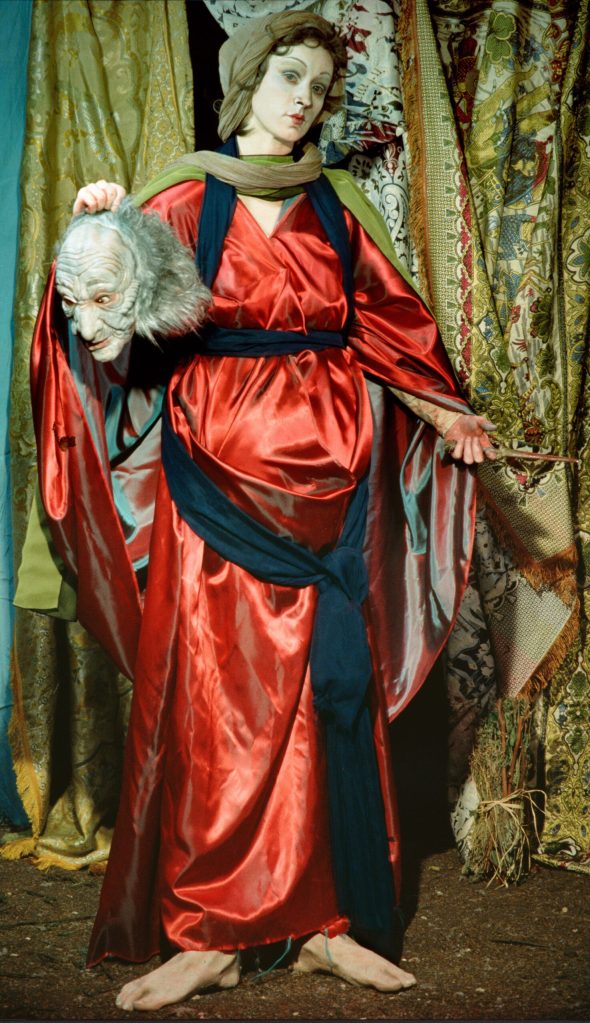
Photography is one of the most accessible forms of creativity that surrounds us. Billions of people have access to a built-in camera in their phones, and relatively inexpensive options for photos, such as Polaroids or digital cameras. Because of this normalized level of access and the creative utilization of cameras, most people would if not all, would consider photography to be art. However, this was not always the case. Photography was invented and introduced to the public in the mid-19th century. In its infancy, there was a large debate surrounding whether photographs could be considered art; this debate and shift in how we think about art, and what art can be, is one of the most significant in contemporary art history. What makes photographs have artistic value? Does that differ from the artistic value given by paintings or sculptures? The implementation of photography expanded the borders of what could be considered art, rather than just being an objective view of the world around the photographer. Photographs can also tell stories, invoke emotion, and be incredibly powerful.
Circles in a circle
Abstract Art
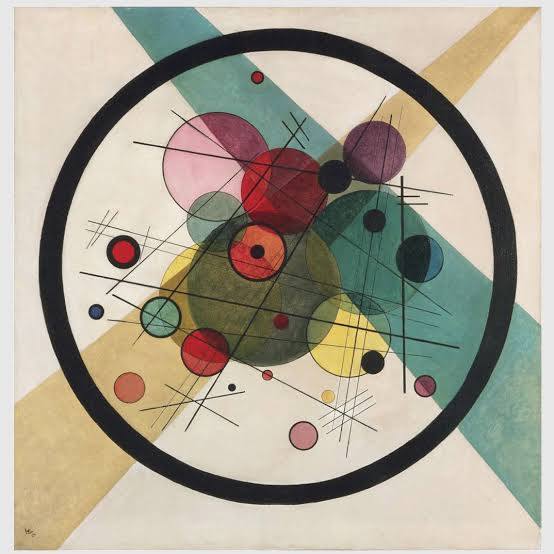
Abstract art has always been controversial; some people believe it has lesser artistic value than traditional representational art, and some believe it can instead be the highest form of artistic expression. The birth of pure abstraction is usually credited to Wassily Kandinsky, a Russian painter who worked mainly in the late 19th and early 20th centuries. Famously, his pieces portrayed an impression based on music that was played while he painted. He painted what he felt visually embodied the music that he heard while painting. Though his work was groundbreaking and beautiful (also one of my personal favs), it most likely was not the first of its kind. In the same time period, a little before Kandinsky, Hilma af Klint worked, but her work was not revealed until 50 years after her death, as per her request, so the birth of abstraction is not accredited to her. Hilma af Klint’s artwork was wonderfully nonsensical and mystic. I plan to write a more detailed post about her because I simply cannot cover it quickly.
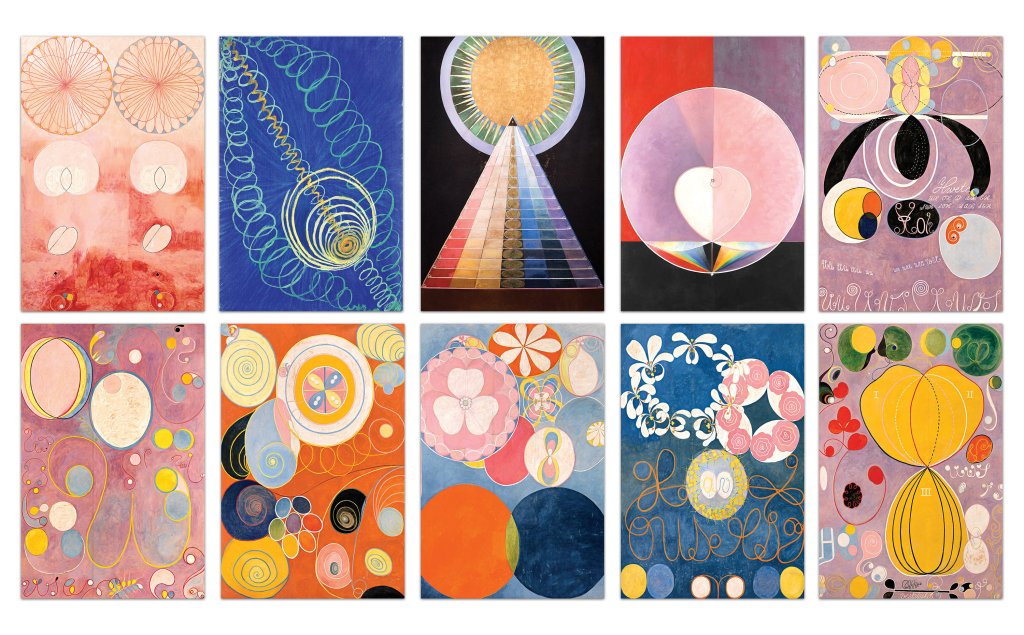
With this little art history lesson done, let’s get down to why abstract art is being included in this post. There is a first instance of every new method or new idea, and oftentimes, trying new things that are out there and creative is usually met with criticism. Even now, many people don’t “Get” abstract art. They see abstract pieces and say things like “I could have painted that,” yeah.. so? One of the main purposes of abstract art is to show the audience something, obviously. Rather than just showing them seemingly random shapes and colors that do not necessarily require a high level of artistic skill to accomplish, their purpose is to portray a feeling, an emotion, an experience, etc. However, it is not always easy to find these meanings. If you are not very interested in understanding the artist’s intent, you simply won’t. The appreciation of abstract art requires intention. You can look at a beautiful landscape and say, “Wow, that is such a breathtaking mountain.” But it requires some deeper thought to think and say, “Well, what are the colors of the sky supposed to make me feel? Why is the mountain the focal point? What is in the details?” This same logic can be applied to abstract art. You might just see shapes and colors at first, but what does that actually represent? What is the meaning behind the color, the composition, and the title?
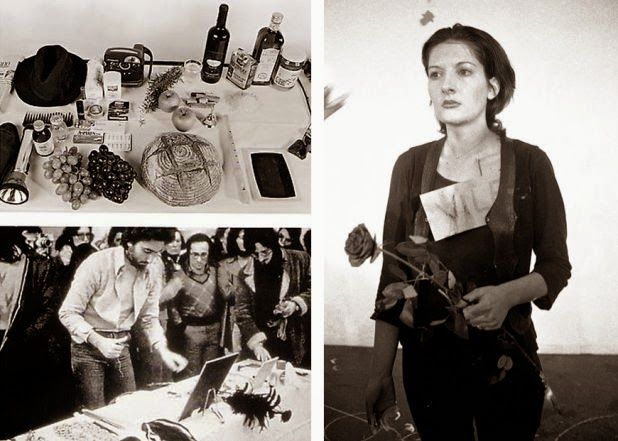
Rythymn 0
Performance Art
Performance art is an art form that has been increasingly under fire in the last few years on the internet, mostly from social media accounts that are trying to sell mass-produced products and mask them as handmade for profit. an example of this would be a sample of a video of a performance art piece with the caption “modern art” and then showing fake videos of process for whatever shitty product they are trying to sell along with a caption saying “my art * insert stupid little crying eyes emoji” this is problematic for multiple reasons, one being it is purposefully deceiving people into buying mass produced items using other people’s art and process, and the main issue I will focus on, insinuating that “modern” (Not even categorizing it correctly) performance art is less than, worthless, dumb, or not real art. despite this rise in marketing strategy, and the constant pushback that is on artistic communities for what is considered real art, performance is artistic expression.
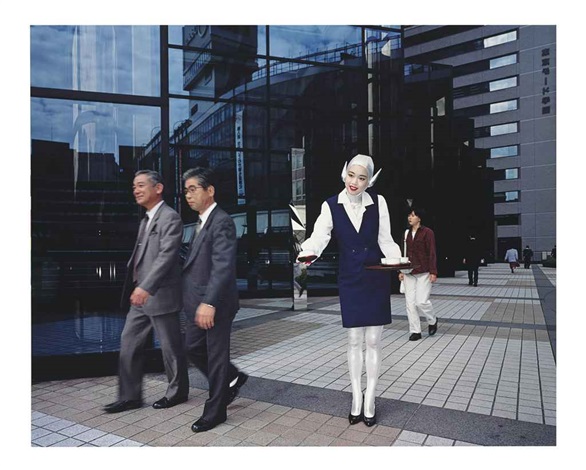
Tea Ceremony
Art at its core is expression, and the human body can demonstrate a myriad of emotions and meaningful experiences. Often, performance pieces are meant to reflect something about human nature, society, or other innately human experiences, both the good and the ugly. We all have a body; it is something that brings us all to a place of understanding because of this. When someone cuts their finger, you can understand the certain type of pain that getting a cut on your finger can cause. The same concept applies with performance art: as the artist uses their body, showing both physical and metaphorical feeling, pain, and emotion, the viewer is able to put themselves in that position, which can be incredibly powerful. The body in itself is constantly expressing and communicating to others, so I would argue that even the human body in itself is art, performance art.
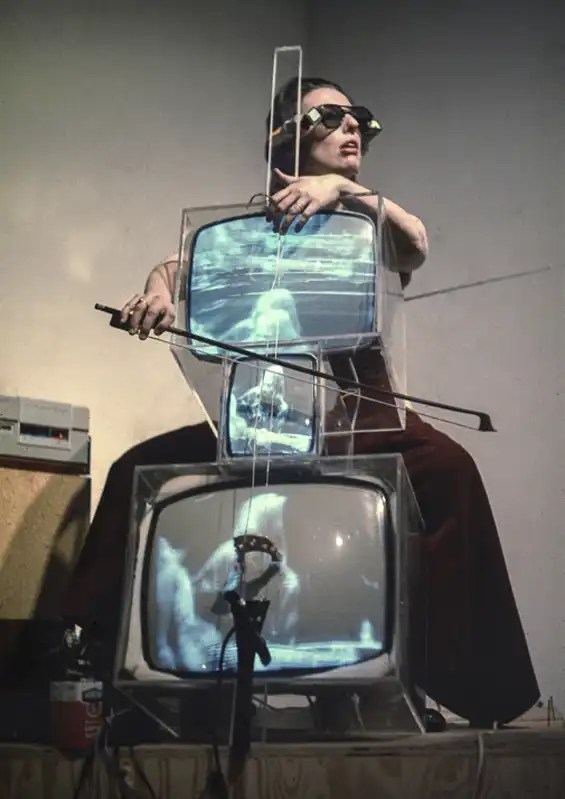
TV Cello
In the end, art is subjective. It is up to each individual to decide what they enjoy and what they dislike, but it is also important to understand that within that subjectivity, we cannot decide what is worthy of recognition, and what art is or is not. Art is inherently expansive and ever-changing, so as viewers and participants, we sometimes need to look at art in a non-traditional way. For any artists: continue to create, even and especially if it pushes the boundaries of what exactly art is. 🙂
 iwtba
iwtba 
Leave a comment